


D-Type Rubber Fenders: An Overview of Their Applications in Marine Industries
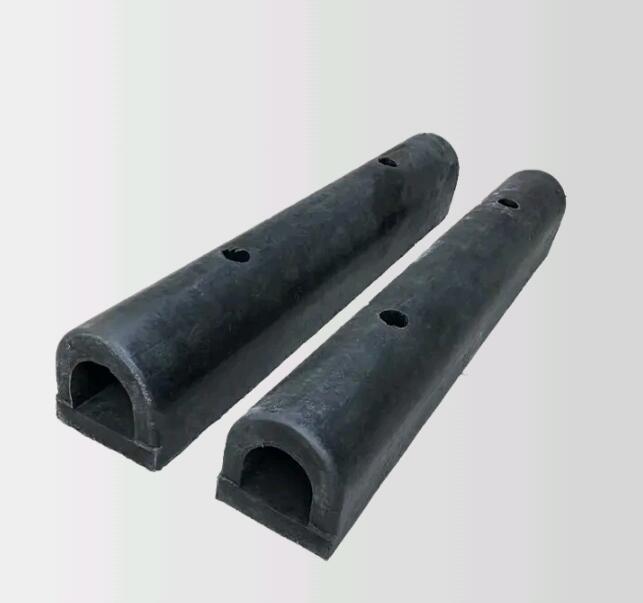
D-type rubber fenders are among the commonly used fender systems in marine applications. Renowned for their reliability, durability, and ease of installation, these fenders are a critical part of mooring systems, protecting both vessels and docks from the physical stresses that occur during berthing and unberthing. As with all marine equipment, the craftsmanship behind D-type rubber fenders plays a crucial role in ensuring their performance, longevity, and suitability for various marine environments.
D-type rubber fenders are available in a variety of sizes, ranging from small fenders used in recreational docks to larger ones designed for commercial shipping ports. Their flexibility, cost-effectiveness, and ease of maintenance make them a popular choice across a wide range of marine environments.
Materials: The Foundation of Durability
The choice of material is perhaps the critical aspect of D-type rubber fender craftsmanship. To perform in harsh marine environments, these fenders must withstand exposure to saltwater, UV rays, varying temperatures, and mechanical stress. As such, manufacturers use high-quality rubber compounds, typically based on synthetic rubber such as EPDM (Ethylene Propylene Diene Monomer) or NR (Natural Rubber), sometimes with additional reinforcing agents to improve their performance.
EPDM Rubber: EPDM is one of the commonly used materials for D-type rubber fenders due to its resistance to UV rays, ozone, and weathering. Its durability in temperature conditions—both hot and cold—makes it suitable for use in all types of marine environments, from tropical waters to colder climates. Additionally, EPDM rubber provides strong resistance to abrasion and is highly elastic, ensuring that the fender can absorb significant impacts without losing its shape.
Natural Rubber (NR): Some high-performance fenders are made from natural rubber due to its tensile strength and resilience. Natural rubber also offers shock absorption properties, making it ideal for docks and ports that handle high-impact traffic, such as busy commercial shipping ports.
Other additives such as carbon black, silica, and anti-aging agents are mixed into the rubber compound to further enhance properties like wear resistance, aging resistance, and durability. These additives help ensure that the fender can withstand the elements for extended periods without significant degradation in performance.
https://www.zjtcgm.com/product/d-type-rubber-fender/d200x200x1000-pier-anticollision-rubber-fender.html
Features
●With reaction force its energy absorption is higher that of cylindrical type.
●It can be installed and replaced easily.
●It is widely used due to its narrow bottom width.
 French
 English
 Arabic
 Spanish
 Portuguese
 Deutsch
 Turkish
 Dutch
Dutch
 Italiano
 Russian
 Romaian
 Portuguese (Brazil)
 Greek
Greek