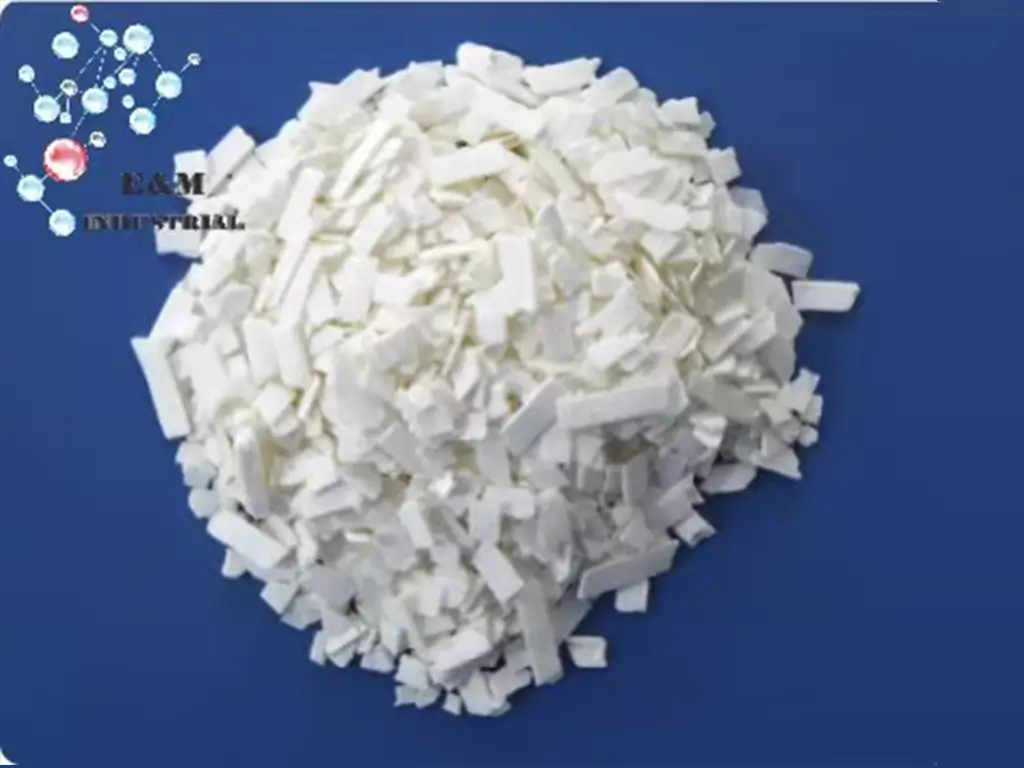
Nitrocellulose is defined by distinct chemical and physical characteristics that underpin its functionality. Chemically, its molecular formula is (C6H7O2(ONO2)3)n, reflecting its structure as a cellulose derivative modified by nitrate groups. Physically, it appears as a white or yellowish cotton wool-like solid, a form that aligns with its cellulose-based origin. From a regulatory perspective, it is classified under UN No. 2557, HS Code 3912200000, and Hazard Class 4.1—indicating it is a flammable solid, a key consideration for storage and transportation.
Packaging options for nitrocellulose are designed to balance safety and practicality. It is typically available in carton boxes with a net weight of 20–25kg or fiber drums ranging from 30–50kg to 70–130kg, catering to both small-scale and industrial-scale usage needs. These packaging choices adhere to safety standards for handling flammable materials, ensuring stability during transit and storage.
One of the most defining features of nitrocellulose is how its nitrogen content dictates its end uses, creating two primary categories of the material:
-
High Nitrogen Content: Nitrocellulose with elevated nitrogen levels is primarily used in the production of smokeless powder and propellants. This application leverages its high energy density and combustion properties, making it a critical component in aerospace, defense, and pyrotechnic industries. Its ability to burn cleanly without producing heavy smoke makes it superior to traditional gunpowder in many high-performance scenarios.
-
Low Nitrogen Content: Commonly referred to as collodion (or guncotton in some contexts), nitrocellulose with lower nitrogen content is a workhorse in consumer goods and industrial manufacturing. Its versatility shines in applications such as coatings, artificial leather, and photographic film—where its film-forming and adhesive properties are highly valued. It is also a key ingredient in printing inks, nitrocellulose lacquers, and bottle caps, providing durability and a smooth finish to products.
Beyond the primary categories defined by nitrogen content, nitrocellulose finds applications across a broad spectrum of industries:
-
Stationery and Labeling: It is used in the manufacturing of stationery items and labeling systems for consumer goods and instruments, leveraging its adhesive and film-forming qualities to ensure long-lasting, smudge-resistant labels.
-
Leather and Textile Processing: In leather tanning and artificial leather production, nitrocellulose enhances texture, durability, and water resistance, creating products that mimic the look and feel of natural leather at a more accessible cost.
-
Pharmaceutical and Photographic Industries: It serves as a component in pharmaceutical formulations and acts as a substrate for photographic film and camera negatives, where its light-sensitive properties and structural stability are essential.
-
Microtechnology and Electronics: Nitrocellulose functions as an embedding agent for biological tissue sections in microtechnology, enabling precise examination under microscopes. It also acts as an adhesive in the electronics industry, providing reliable bonding for delicate components.
Given its Hazard Class 4.1 classification as a flammable solid, proper handling of nitrocellulose is paramount. Users must adhere to strict storage guidelines, including keeping it in cool, dry environments away from heat sources, open flames, and oxidizing agents. Protective equipment such as gloves, goggles, and flame-resistant clothing is recommended during handling to mitigate fire and chemical exposure risks. Additionally, compliance with local, regional, and international regulations for transporting flammable materials is essential to ensure safety throughout the supply chain.
Nitrocellulose’s unique combination of properties—derived from its cellulose base and modified by esterification—makes it an indispensable material across industries. From high-performance propellants to everyday consumer goods, its versatility is unmatched, with nitrogen content acting as the key differentiator in its applications.




 English
 French
 Spanish
 Portuguese
 Deutsch
 Turkish
 Dutch
Dutch
 Italiano
 Russian
 Romaian
 Portuguese (Brazil)
 Greek
Greek