


Building a Successful API Group II Re-refining Plant: Key Technical and Commercial Considerations

The market for high-quality re-refined base oils is booming, driven by sustainability mandates, corporate ESG goals, and the steady demand for API Group II lubricants. For investors and engineers, establishing a modern re-refining plant represents a significant opportunity. However, success hinges on a deep understanding of both the complex technology and the rigorous commercial landscape. Here are the key considerations for building a profitable and sustainable API Group II re-refining facility.
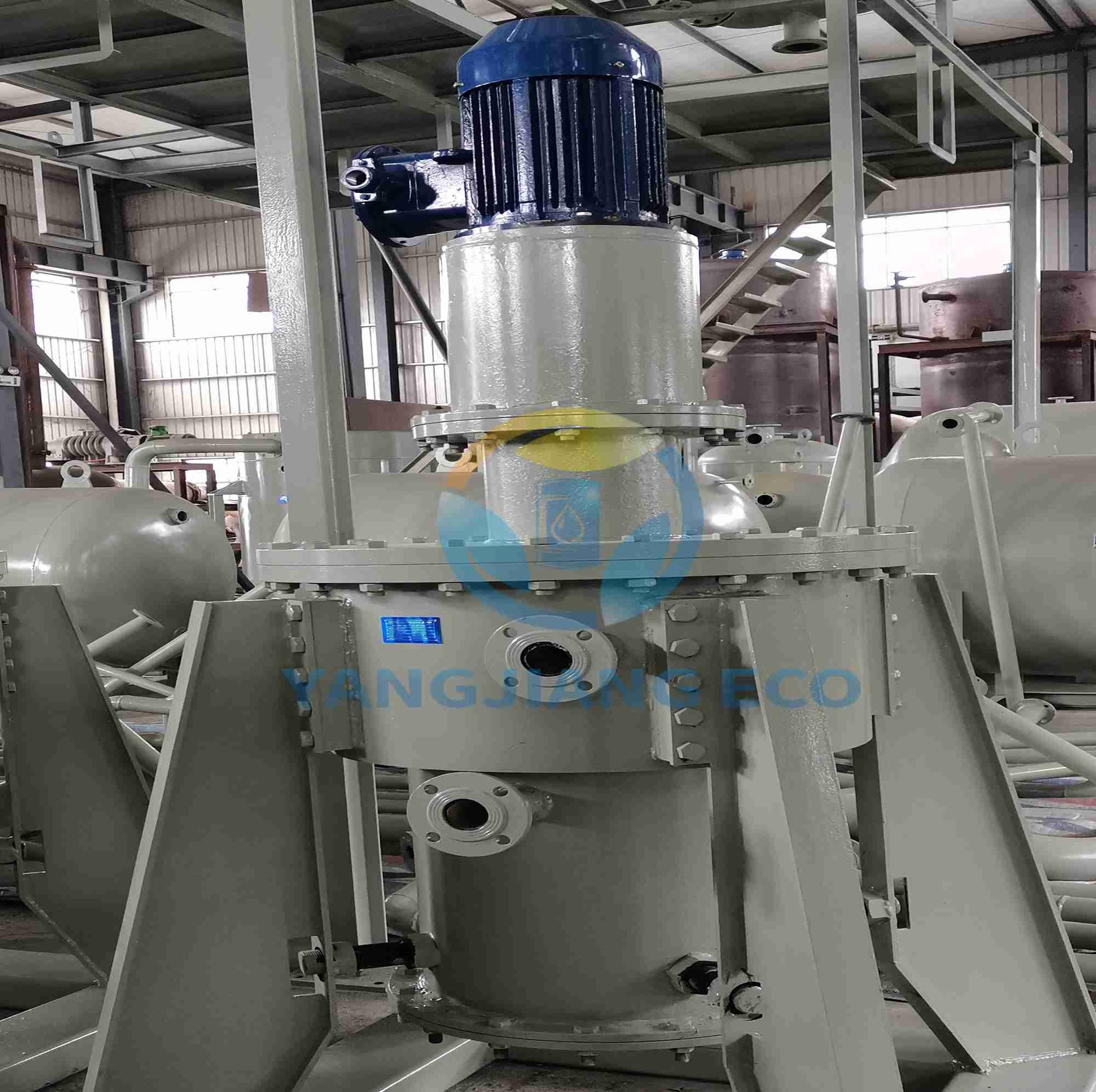
1. Feedstock Strategy: Securing the Lifeblood of Your Operation
A re-refining plant is only as good as its supply of used oil. A robust and reliable feedstock strategy is non-negotiable.
Quality & Consistency: Not all used oil is equal. Establish strict intake specifications and build relationships with trusted collection networks (e.g., automotive workshops, industrial plants, fleet operators) to ensure a consistent flow of feedstock with predictable contamination levels.
Logistics & Pre-treatment: The cost of collection and transportation is a major factor. Consider plant location relative to feedstock sources. Implement effective pre-treatment (e.g., dehydration, de-fueling, and filtration) to prepare the feedstock for the main process.
2. Core Technology Selection: The Path to API Group II Quality
The choice of re-refining technology is the most critical capital decision. To produce API Group II base oil, you must move beyond simple acid-clay treatment and adopt advanced processes.
Thin-Film Evaporation + Hydrotreating: This is the industry-standard combination for high-quality output. The process typically involves:
Pre-flash/De-asphalting: Removes water, light fuels, and heavy asphaltics.
Thin-Film Evaporation: Gently separates the desirable lubricant fraction from additives, metals, and other contaminants under high vacuum and temperature.
Hydrofinishing/Hydrotreating: This is the crucial step for achieving Group II specification. Using hydrogen and a catalyst, it saturates unstable molecules, removes remaining sulphur, nitrogen, and oxygen compounds, and improves the oil's color and oxidation stability.
Vendor Evaluation: Thoroughly vet technology providers, scrutinize their reference plants, and ensure their process guarantees a consistent yield of on-spec Group II base oil.
3. Economic Viability and By-Product Valorization
The business case extends beyond base oil.
By-Product Streams: The process generates other saleable streams, including:
Light Ends: A fuel-like fraction that can be used internally for energy or sold.
Heavy Asphaltic Residue: Often used as an extender for asphalt or as a heavy fuel oil.
Process Fuels: Some streams can be blended into marine fuel.
Maximizing the value of these by-products is essential for improving overall plant economics.
4. Navigating the Regulatory and Permitting Maze
Re-refining plants handle hazardous waste and are subject to intense regulatory scrutiny.
Environmental Permits: Secure all necessary air, water, and waste permits early in the project lifecycle. This process can be lengthy and complex.
Product Certification: Your final base oil must be certified against the API Group II standard. Engage with testing labs and licensing bodies from the outset to ensure your process design and quality control can meet these stringent specifications.
5. Off-Take Agreements and Market Positioning
Before pouring concrete, know who you are selling to.
Market Analysis: Understand the regional demand and pricing for Group II base oils.
Secure Off-Take Partners: Consider negotiating long-term supply agreements with major lubricant blenders or distributors. This de-risks the project and provides revenue certainty, which is crucial for financing. Emphasize the "green" premium and ESG benefits of your product to differentiate it from virgin base oils.
Conclusion
Building a state-of-the-art API Group II re-refining plant is a capital-intensive but highly promising venture. Success requires a holistic approach that integrates a bulletproof feedstock supply, proven hydrotreating technology, a sharp focus on by-product economics, and a proactive commercial strategy. For those who get it right, the reward is a resilient business positioned at the sweet spot of profitability and environmental stewardship.
 Spanish
 English
 Arabic
 French
 Portuguese
 Deutsch
 Turkish
 Dutch
Dutch
 Italiano
 Russian
 Romaian
 Portuguese (Brazil)
 Greek
Greek