


How Virtual Reality Bridges Skill Gaps in Oil and Gas Workforces
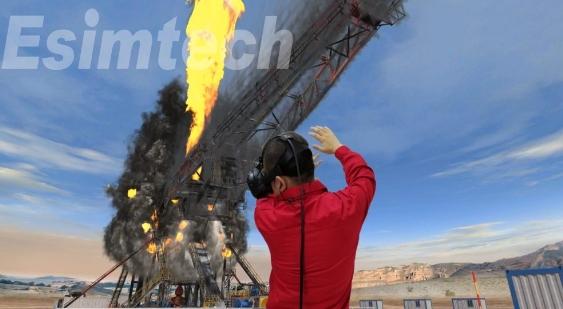
The oil and gas industry faces a unique set of challenges, including an aging workforce and the need for specialized skills in emerging technologies. Bridging the skill gap is crucial for ensuring the industry's continued success and safety. Enter Virtual Reality (VR), a technology poised to revolutionize workforce training and development.
Here's how VR is tackling the skill gap in the oil and gas sector:
Hands-on Training in a Safe Environment: VR allows trainees to practice complex tasks, such as equipment maintenance and emergency response procedures, in a safe and controlled environment. This minimizes the risk of accidents during on-the-job training, while providing valuable hands-on experience.
Personalized Training: VR training can be customized to cater to individual learning styles and skill levels. Trainees can receive personalized feedback and guidance, allowing them to focus on areas where they need improvement.
Enhanced Situational Awareness: By immersing trainees in realistic 3D environments, VR can significantly improve situational awareness. Workers can learn to identify potential hazards, assess risks, and develop effective strategies to mitigate them.
Remote Training and Collaboration: VR enables remote training and collaboration, making it easier to train employees across different locations and time zones. This is particularly beneficial for the geographically dispersed nature of the oil and gas industry.
Upskilling and Reskilling: VR can be used to upskill existing employees on new technologies and procedures, as well as reskill workers whose jobs may be impacted by automation.
Beyond basic training, VR is also being used to:
Train personnel for specific tasks: From rig inspections to pipeline maintenance, VR can provide realistic training for a wide range of job roles.
Improve equipment maintenance and repair: VR simulations can be used to train technicians on complex equipment maintenance procedures, reducing the risk of human error.
Conduct pre-job hazard assessments: VR can be used to virtually "walk through" planned operations, identifying potential hazards and developing mitigation strategies before work begins.
The future of VR in oil and gas workforce development looks bright. As technology continues to evolve, we can expect even more immersive and realistic simulations that will further enhance worker safety and operational efficiency. By embracing this innovative technology, the oil and gas industry can bridge the skill gap, ensure a safe and skilled workforce, and drive innovation for years to come.

 English
 French
 Spanish
 Portuguese
 Deutsch
 Turkish
 Dutch
Dutch
 Italiano
 Russian
 Romaian
 Portuguese (Brazil)
 Greek
Greek