


Understanding the Arcus Marginalis in Surgical Procedures
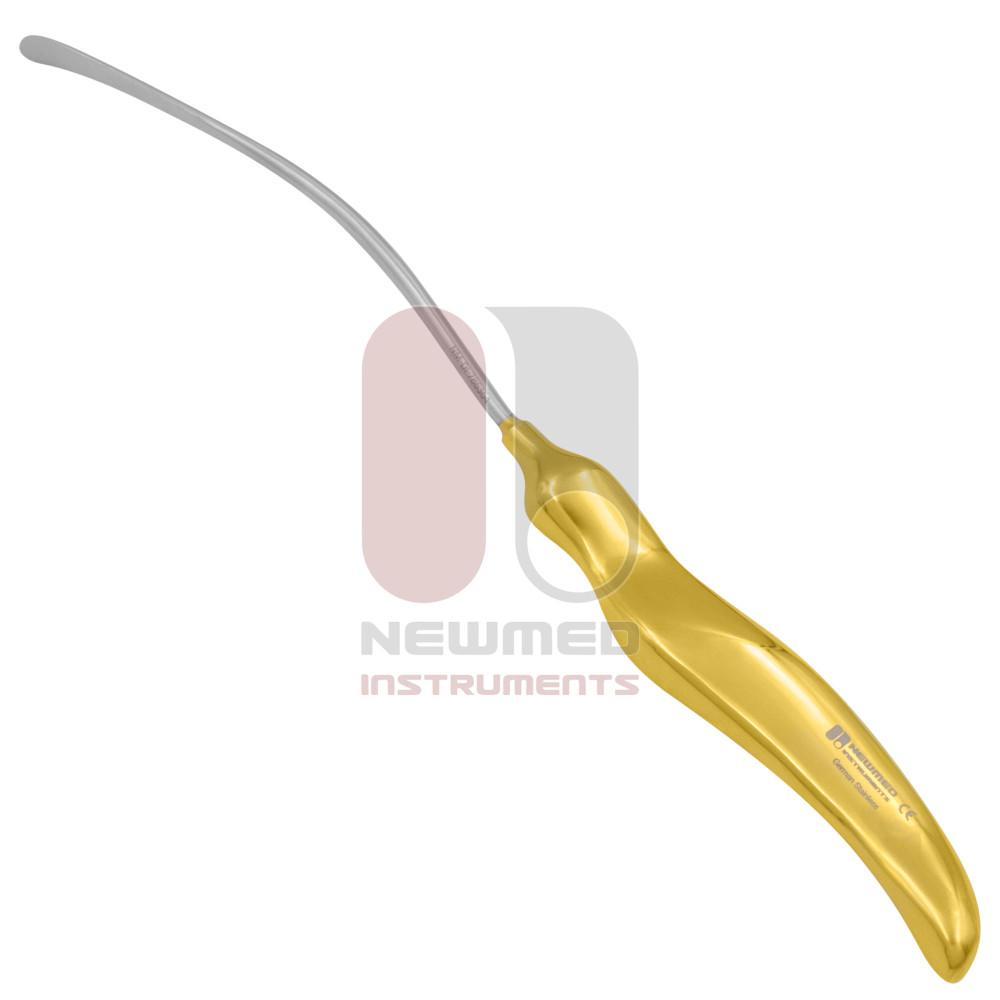
The anatomy of the human face is intricate, with each structure playing a critical role in both function and aesthetics. For surgeons specializing in oculoplastic and facial procedures, a deep understanding of these structures is essential for achieving optimal outcomes. One such critical landmark is the arcus marginalis, a fascial structure that has significant implications in both reconstructive and cosmetic surgery of the periorbital region. This article will provide a detailed overview of this anatomical feature, its surgical relevance, and its importance in procedural planning.

Defining the Arcus Marginalis
The arcus marginalis is a dense, fibrous thickening of the periosteum that marks the insertion point of the orbital septum onto the orbital rim. It essentially acts as a boundary, separating the preseptal space from the intraorbital space. This structure runs along the entire circumference of the bony orbit, providing a strong attachment for the orbital septum, which in turn contains the orbital fat. Its precise location and integrity are fundamental to the normal appearance and function of the eyelids and surrounding tissues.
Understanding the relationship between the orbital septum, the orbital fat pads, and this key anatomical line is crucial. In youth, this transition is smooth and imperceptible. However, with age, weakening of the orbital septum can allow orbital fat to herniate forward, creating puffiness or "bags" under the eyes. The visible depression that often accompanies these bags, known as the tear trough deformity, is directly related to the location of the arcus marginalis and its tethering effect on the overlying skin.
Surgical Significance in Blepharoplasty
In lower eyelid blepharoplasty, addressing the area of the arcus marginalis is often a central component of the procedure. A simple excision of herniated fat may not be sufficient to correct a prominent tear trough. In these cases, surgeons must perform an "arcus marginalis release." This technique involves carefully metzenbaum dissecting scissors and releasing the orbital retaining ligament at its insertion point along the orbital rim.
Releasing this structure allows the surgeon to reposition the herniated orbital fat over the infraorbital rim, effectively filling the hollow of the tear trough. This fat transposition technique provides a much smoother and more youthful transition from the lower eyelid to the cheek. Precise execution of this maneuver is vital to avoid complications and achieve a natural-looking result. It requires not only a steady hand but also instruments designed for delicate facial surgery.
Considerations in Advanced Facial Surgery
Beyond standard blepharoplasty, the arcus marginalis is a key landmark in more complex procedures, such as midface lifts and fracture repairs. During a midface lift, releasing this ligament is necessary to elevate the cheek tissues and restore youthful volume to the midface. In orbital fracture repair, identifying the intact portions of the structure is essential for correctly reconstructing the orbital rim and ensuring proper support for the globe and surrounding tissues.
For surgeons, both those starting their practice and those with established expertise, mastering procedures involving this anatomical feature is a mark of skill. New Med Instruments understands this pursuit of perfection. We seek to provide quality surgical instruments and superior service to surgeons, students, and healthcare professionals all over the world, who value perfect and precise results for their patients. Whether you are endeavoring to improve your techniques or add new procedures to your repertoire, our products are designed to meet your specific surgical needs for delicate and exact work.
Conclusion: Precision in Periorbital Surgery
The arcus marginalis is more than just a line on an anatomical chart; it is a critical structure that defines the landscape of the periorbital region. Its proper identification and management are fundamental to success in a wide range of facial surgeries. For healthcare professionals dedicated to achieving the best possible outcomes, a thorough knowledge of this structure, combined with access to high-quality surgical tools, forms the foundation of excellence in patient care.
 English
 Arabic
 French
 Spanish
 Portuguese
 Deutsch
 Turkish
 Dutch
Dutch
 Italiano
 Russian
 Romaian
 Portuguese (Brazil)
 Greek
Greek